How Does a Roller Crusher Work? Design and Application
A roller crusher crushes rock and ore between two rotating rollers. Operators in the raw materials processing industry use roller crushers to produce consistent particle sizes, save energy, and maintain a stable material flow.
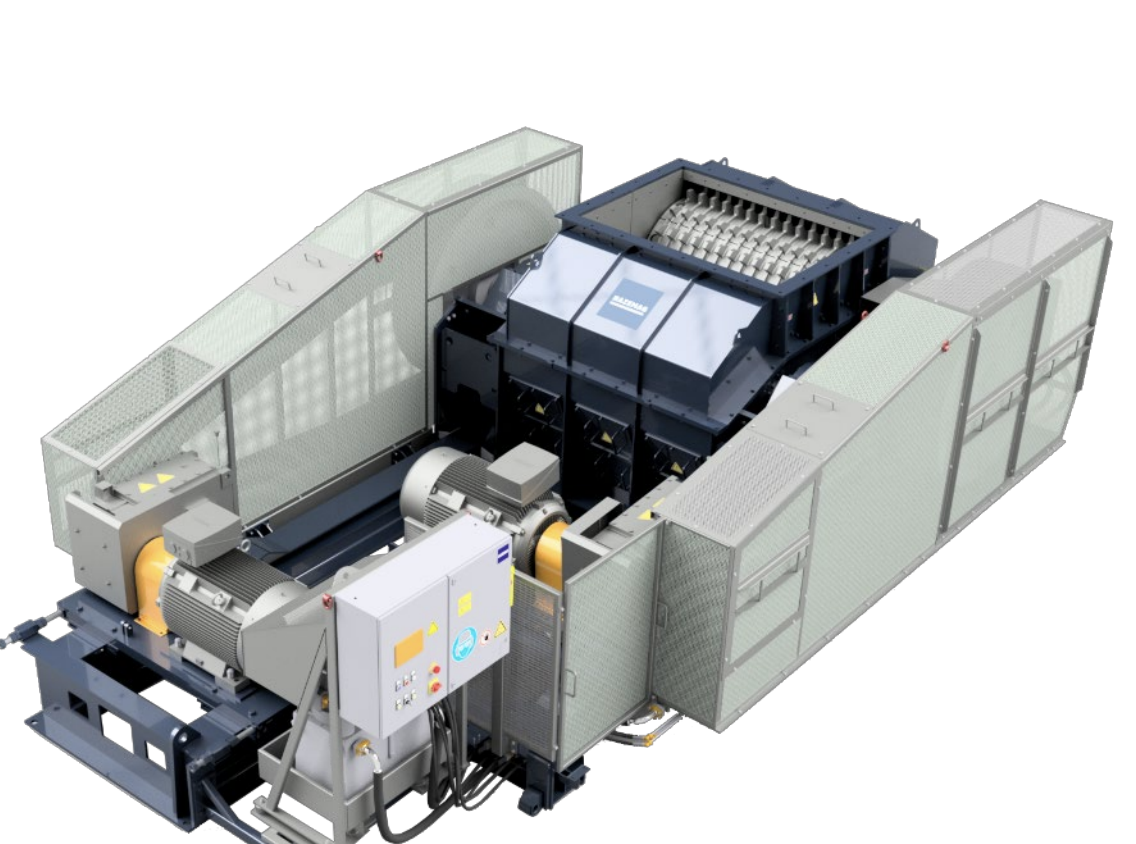
The crushing principle of a roller crusher
A roll crusher is a machine used in crushing technology that reduces material through pressure and shearing. The material enters the roll gap, where it is captured, compacted, and crushed. HAZEMAG roll crushers operate continuously and deliver a consistent feed to downstream crushing plants.
What are the main components of a roller crusher?
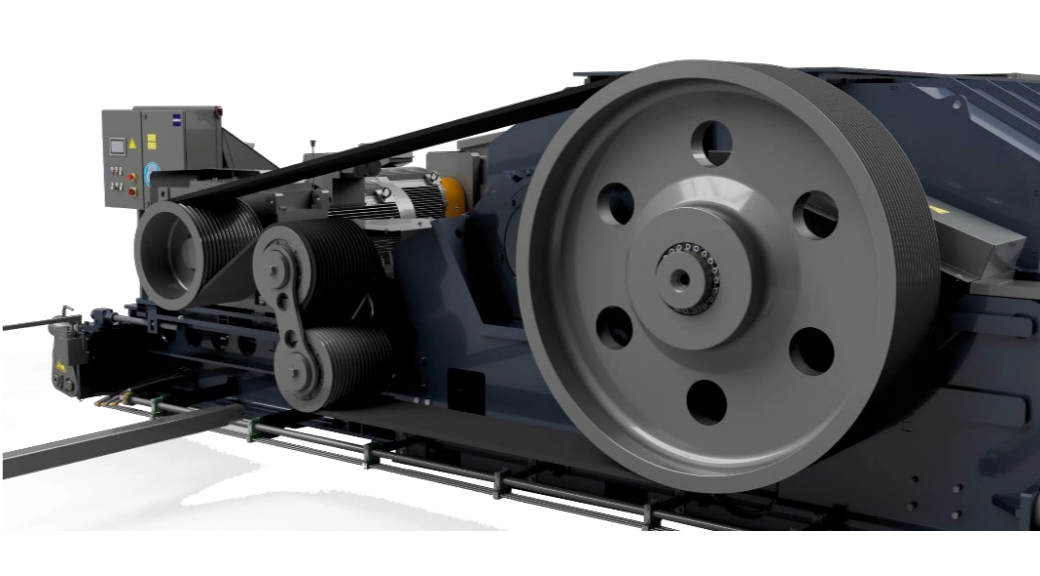
The roll crusher consists of two rolls, the roll gap, drive and bearings, as well as a robust housing. Depending on the model, smooth or toothed surfaces are used. The roll crusher can utilize hydraulic systems to pass foreign objects and protect the roll gap.
Where are roller crushers used in mining?
In mining and raw material processing, the roller crusher often handles the secondary or tertiary stage. The roller crusher is suitable when you need a defined particle size, want to limit fines, or require uniform product distribution for screening and grinding stages. In crushing plants, the roller crusher stabilizes the material flow when feed rates fluctuate significantly.
Typical feed materials in material processing
- Hard rock and ore with clean fracture surfaces
- Limestone, dolomite, and similar mineral raw materials
- Coal and coke with suitable roller profiles
- Recycled material with a controllable particle size range
Roll crusher vs. roll mill: What is the difference?
A roll crusher is designed for coarse to medium crushing. A roll mill is more focused on grinding processes and achieving finer particle sizes. If your raw material processing requires a defined particle size before classification, the roll crusher is often the more suitable stage. If you prioritize fine grinding and particle optimization, the roll mill becomes the focus.
Overview of the advantages and limitations of a roller crusher
A roller crusher excels in consistent product quality and often low energy consumption per ton. At the same time, you must keep an eye on wear, dust, and moisture. A roller crusher is particularly suitable when you require process stability in the crushing stage and the subsequent steps of material processing benefit from it.
Advantages: Particle size distribution, energy consumption, controllability
- Consistent particle size for stable screening and grinding stages
- Good controllability via roll gap and speed
- Compact design for modular crushing plants
- Often lower energy consumption than impact crushing systems
Limitations: Wear, moisture, foreign objects
- Wear can be high with abrasive materials
- Moist or sticky feed material makes feeding difficult
- Foreign objects require protective measures on the roller crusher
The HAZEMAG solution: HRC roller crusher
For an overview of the roller crusher solution for raw material processing, please visit the product detail page:
HRC Roller Crusher
Compact roller crusher for energy-efficient crushing of mineral raw materials with uniform particle size distribution and high throughput.
Request a roller crusher from HAZEMAG now
Are you planning to integrate a roller crusher into your raw material processing or optimize an existing crushing plant?
FAQ: Roll crushers in crushing technology
A roller crusher is a crusher that crushes material between two rollers in a defined gap. Pressure and shearing produce a controlled particle size. In mining and raw material processing, the roller crusher helps stabilize throughput and feed downstream crushing plants and screening processes evenly.
The impact crusher crushes material by impact against the rotor, while the roller crusher crushes it through pressure in the roller gap. Impact crushers often produce more fine particles and are well-suited for processing brittle materials. Roller crushers often deliver a more uniform particle size distribution and can be precisely adjusted to the target particle size via the roller gap and profile.
A roller crusher is used in raw material processing to crush material between two rollers to a defined particle size. It is typically used in the second or third crushing stage when a uniform particle size distribution and a stable material flow are important for downstream screening or grinding processes.
The roll crusher primarily crushes material using pressure in the roll gap and is designed for coarse to medium particle sizes. The roll mill is more suited to grinding processes and finer end products. In raw material processing, the roll crusher is often used before classification or before a grinding stage, while the roll mill is part of the fine processing stage.
Internal Links at a Glance
- Products and Crushing Plants → Our Products
- News and Technical Articles → Our Blog
- Contact → Contact Page